Preamble
To begin, I would like to thank Karel Matějka, Karel Taufman, Michal Škvor and Mirek Papež for answering my inquiries. The files included in the Resources section were created by Karel Matějka. I also have to stress that most of the information I’ve provided here is based on verbal accounts of the people involved and may not be accurate to the truth.
The Origin Of Shade
In late 2004, a young video game company, Black Element Software, in spite of long and tumultuous development and several concept reimaginings, released a well received game, very ambitious for the Czech game development scene at the time called Shade: Wrath of Angels for the PC. Two additional ports were planned, but subsequently canceled. One for the Xbox, the other for Nokia's new phone/handheld hybrid, the N-Gage. In this article, I will try to summarize all of the info I've found out about the ambitious mobile port.
Cenega's N-Gage presence
At the time, Cenega, the game's publisher had a game in the works for Nokia's new console. The Roots: Gates of Chaos, a 3D isometric brawler that was being developed in Wrocław, Poland was to be their entry into the N-Gage ecosystem. Whether by Nokia's request or because of their own initiative, Cenega chose its new IP, Shade: Wrath of Angels, as another planned release for the system. This decision is detailed in an obscure press release from around then. Although the original's creators were Black Element, it was decided that the port's development would be handled by a different studio, Centauri Productions, supposedly without the PC game's authors' knowledge.
Porting the game
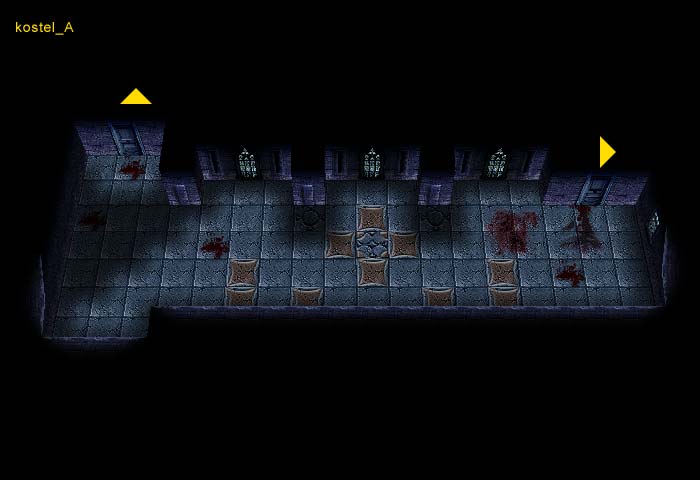
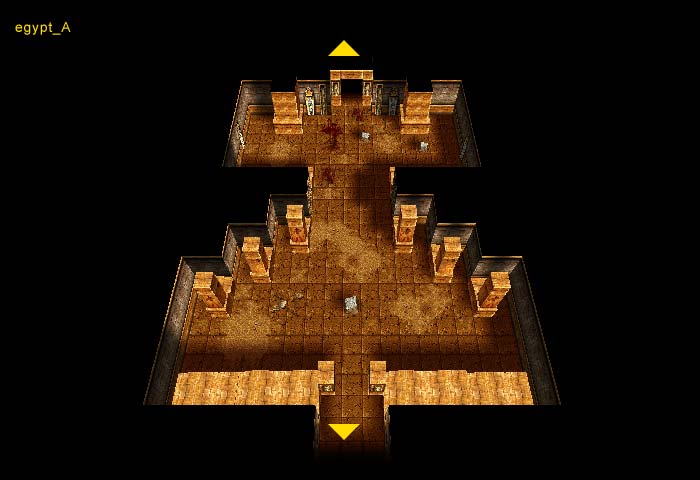
As Shade was a 3D action adventure game with light puzzle solving, combat, complex animations and environments, one can imagine Nokia's game deck, although relatively powerful specs-wise, would not be able to support a 1:1 direct port. It was therefore decided that the game would be remade as an isometric beat 'em up with simple puzzles, more akin to Cenega's other planned N-Gage release (The Roots: Gates of Chaos ended up coming out in 2005). Development started around October 2004 and the project lead, Mirek Papež from Centauri, drafted a very optimistic description of the upcoming game’s contents for Nokia to use on its product page, advertising Shade as an upcoming title for the system. The development team was very small, only consisting of four people including Papež. Centauri’s graphic designer, Karel Matějka, created two character models and two small environments for testing purposes, as well as basic animations for the characters. Finally, he created an icon for the game, which would display on the phone’s Applications menu (you can access this media in the resources). Another member of the development team was Michal Škvor, who worked as a programmer at Centauri, although his contributions to the project are unknown, as he could not remember any specifics besides him having written code for it. The final collaborator on Shade was Karel Taufman, then an animator at Centauri. From what I know, he created animations for several models, some of which are still unaccounted for. These supposedly include basic character motion, attack and death animations.
The roadblock
Alongside the work of this small group, a different team or individual was working on the game’s engine, which was outsourced to them. Their identity is not known, but a possible suspect would be someone within Cenega, namely its Polish branch, who published Roots. No known record of this engine exists, but it was likely very bare-bones. Based on the recollection of multiple eye-witnesses, it ran very slowly, being able to render only a sixth of the 600 polygons on screen at a time, which was projected to be the workable minimum for the finalized product. Development was consequently halted, but sadly the reason for the project’s discontinuation is unclear. From my research, it seems that Nokia may have been dissatisfied with the pace of development. Alternatively, it may have been Cenega who pulled the plug, after being reported to about the engine hiccup.
Closing thoughts
In conclusion, it’s regrettable that this game never saw the light of day. Thankfully, some of the resources that would have made up the final product have survived the nearly 20 year silence after its brief teaser on the N-Gage website, bringing closure to the two people who noticed and were excited by its existence.
Resources